

In today’s fast-paced world, anxiety has become a common mental health concern affecting millions of individuals worldwide. While there are various strategies to manage anxiety, one intriguing approach that has gained attention is traveling. But can exploring new destinations truly act as an antidote to anxiety? In this blog, we will delve into the science behind travel’s potential as a remedy for anxiety, exploring the psychological and physiological effects that make it a promising solution.
Exposure to Novel Environments

Traveling exposes you to new and unfamiliar environments, breaking away from the monotony of daily life. This change in scenery can have a positive impact on anxiety levels. Scientists suggest that exposure to novel surroundings stimulates the brain and triggers the release of dopamine, a neurotransmitter associated with mood, pleasure and reward. This surge in dopamine can counteract anxious feelings and promote a sense of well-being.
Escaping Routine and Stressors

The daily grind can contribute to anxiety by creating a constant cycle of stressors. Traveling offers a chance to escape from these routine stressors, providing a valuable break from work-related pressures, personal responsibilities, and other triggers. Psychologists argue that this break allows you to recharge and reset your mental state, reducing anxiety levels in the process.
Anxiety and even correlating symptoms like OCD often thrive on predictability and routine. Travelling, on the other hand, introduces you to uncertainty, unpredictability, and new challenges. By stepping out of their comfort zones, travellers have the opportunity to build resilience and adaptability. Facing and overcoming these challenges can lead to a sense of accomplishment and self-confidence, ultimately diminishing anxiety and boosting overall mental well-being.
Travel has the power to restructure your brain
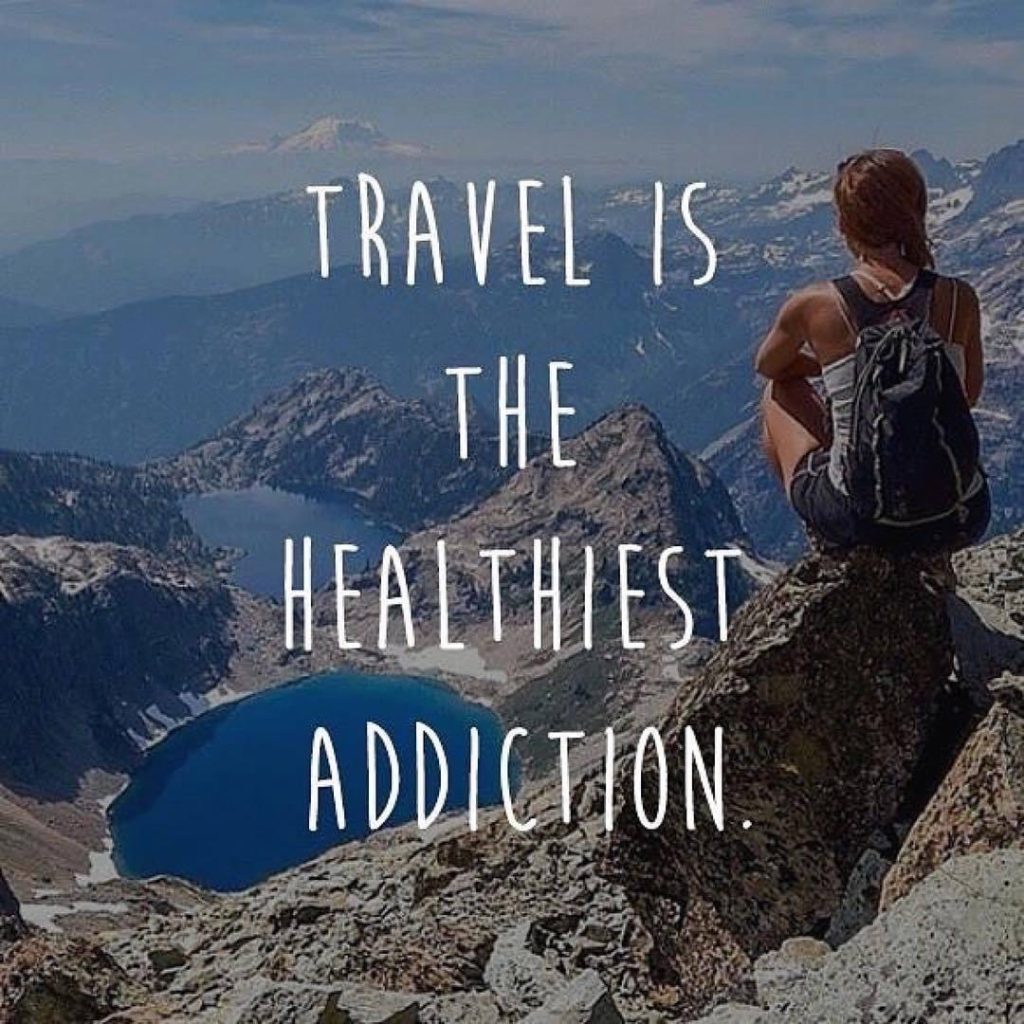
While scientists once believed that the brain’s malleability was limited to childhood, it is now widely recognised that neuroplasticity — the brain’s ability to reorganise itself — is a fundamental part of our neural architecture and present throughout life. A change of scenery wakes up your brain and takes it off autopilot. You have to think about small things when you’re in an unfamiliar place, which is entirely the point.
The joy doesn’t end here
The excitement experienced during your travels doesn’t end when you return home. According to a recent study from South Korea, 225 tourists who travelled abroad were interviewed, revealing that, on average, their overall life satisfaction increased 15 days prior to their trip and persisted one month following their return. (Now if you’re like most travel addicts I know, you won’t go a month without planning your next trip anyway.)
Travelling enhances your creativity
(Is this one a bit too obvious? Either way, in a 2014 study from the Academy of Management Journal, researchers from the Columbia Business School examined the relationship between international professional experience and creativity. Focusing on the world’s leading fashion houses, the team analysed 11 years of collections to identify any connections between the travel experiences of creative directors and the level of creativity exhibited by their respective fashion houses.
The study revealed that brands whose creative directors had more exposure to multicultural experiences produced the most innovative designs, as determined by a panel of fashion journalists and independent fashion buyers. Proposing that travel stimulates and fosters “cognitive flexibility”.
It can have a positive impact on your personality
Research suggests that being abroad, even if for a short period of time, can influence core personality traits, particularly in openness — those with this personality trait tend to be open to new experiences and tend to seek out novelty — they are also very good at thinking about and making connections between different concepts and ideas, helping them find it easier to cope with unexpected change. Something that people who are high in in neuroticism generally have plenty difficulty with.
Another study published in a 2013 issue of the Journal of Personality and Social Psychology examined German university students, with some studying abroad for one or two semesters while others remained in Germany as part of the control group. Before and after the travel period, all participants underwent a personality assessment measuring the big five personality types. The results showed that the students who studied abroad displayed increased levels of openness, agreeableness and emotional stability compared to the control group. These changes were attributed to new social networks, diversity and new friendships during travel.
Can travelling entirely cure anxiety?
It can act as a powerful antidote by offering a range of psychological and physiological benefits. From exposure to novel environments and escaping routine stressors to building resilience and promoting mindfulness, travel has the potential to alleviate anxiety symptoms. However, it’s important to note that each person’s experience may vary. So, if you’re feeling overwhelmed, consider embarking on a new adventure and let the transformative power of global travel work its magic on your anxiety levels.
When you meet people who have travelled the world and went “vagabonding”, don’t they just seem more at ease in general and have this positive vibe/energy about them?

Let me know what you think in the comments below.
Get insider tips, ask questions and connect with other travellers in our members-only groups
Because travel’s better when we share it.

Responses
On point
I truly believe that traveling has the incredible power to act as a soothing antidote to anxiety. The moment you step away from your familiar surroundings and immerse yourself in new experiences, cultures, and landscapes, a sense of freedom takes over.