
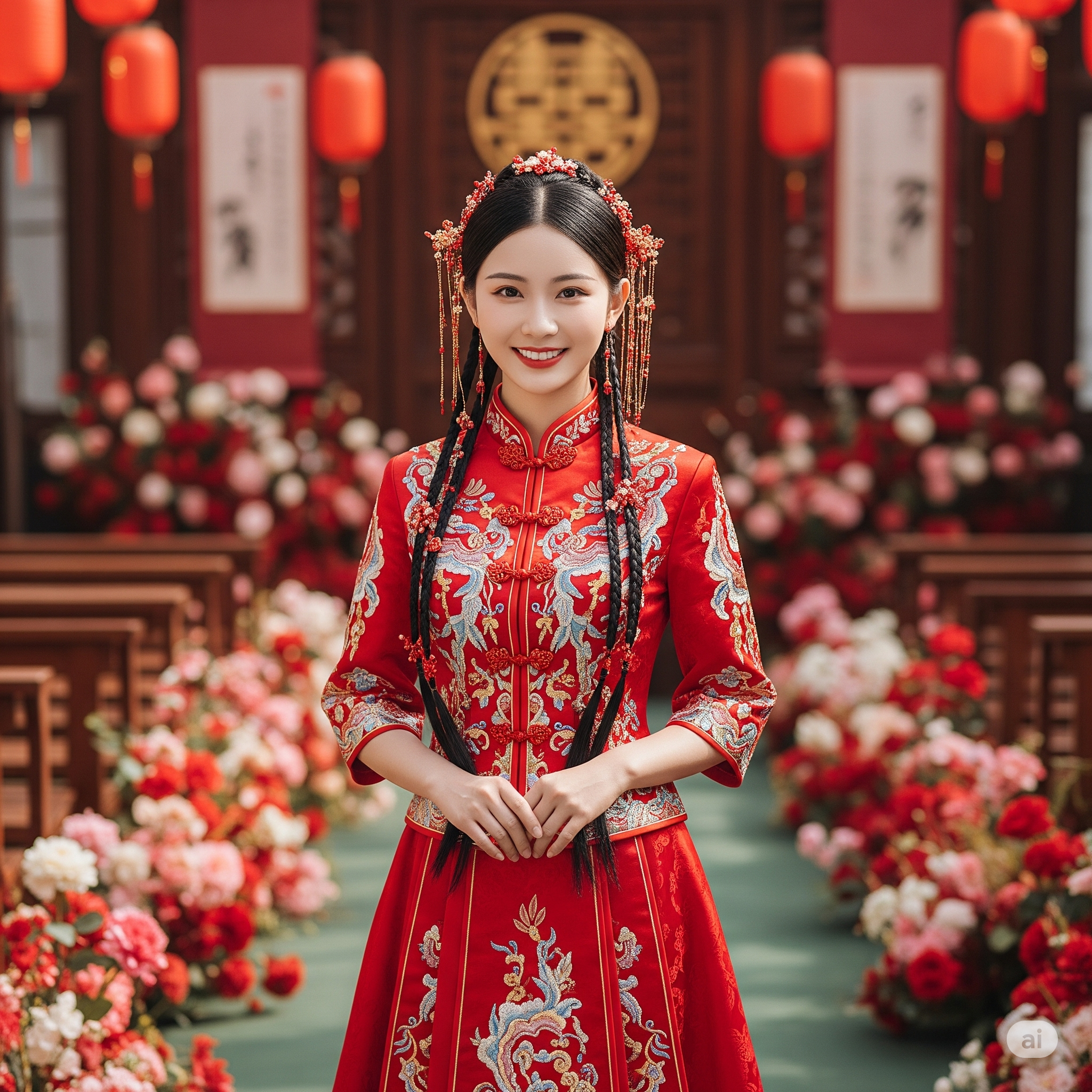
Fun Fact: Around the world, brides traditionally didn’t wear white. Red, gold, blue, and other vibrant colors were the norm—chosen for luck, celebration, or symbolism. White wasn’t even considered practical because it stained so easily. The modern “white wedding dress” craze actually started when Queen Victoria wore a white gown for her wedding in 1840. At the time, white wasn’t a symbol of purity. It was simply a fashion choice that showed off the delicate lace she loved. But the public adored it, the trend spread, and white quietly became the bridal color of the Western world. But some places, such as China, didn’t follow.
Have you ever been to a Chinese wedding? It might be in a huge banquet hall in Beijing, packed with guests and long tables covered in every dish you can imagine. But what strikes most people isn’t the food or the crowd, but the color. Red is absolutely everywhere.
I’ll warn you though, spending hours surrounded by so much red can play a little trick on your eyes. I remember glancing away for a second and noticing faint greenish shapes floating in my vision. It wasn’t anything serious, just something called afterimage persistence, where your eyes get overstimulated by a strong color and temporarily invert it when you look away.
For us at Greet, witnessing this vibrant tradition was a truly captivating experience. It isn’t just the bride’s dress. There were red lanterns hanging above the dance floor, red banners stretched across the walls, and little red envelopes tucked into everyone’s hands or bags. There’s something amazing about watching a single color hold so much meaning, no matter how many times you see it.
So why red? Why does this one color appear in almost every detail? And what does it really stand for?
Let’s take a closer look at why red is such a big part of Chinese weddings—and why it’s stayed that way for centuries.
A Color That Scared Away Monsters
In Chinese culture, red has always been more than just a pretty color. According to old stories, there was a terrifying creature called Nian that would sneak into villages around the New Year. People figured out that loud noises—and the color red—were enough to send it running.
What started as a way to protect families turned into a tradition. Over time, red became a symbol of happiness, protection, and luck. It’s no wonder it eventually became the favorite color for weddings, too.
Why Brides Wear Red
Red isn’t just about looking striking. It carries a lot of meaning. When a bride wears red, it’s a way to bring:
-
Joy to her new life with her partner
-
Good fortune for the family they’ll build together
-
Protection against any bad luck that might come their way
Even today, many brides choose red as a way to honor these beliefs, blending old customs with modern styles.
Traditional Outfits: Qipao and Qun Gua
Chinese brides usually pick between two classic red outfits.
The Qipao (Cheongsam)
This is a slim, high-collared dress made of silk and often covered in beautiful embroidery.
-
It became popular in Shanghai about a hundred years ago.
-
You’ll see designs like peonies (for prosperity), phoenixes (for grace), and lotus flowers (for purity).
-
Lots of brides wear it for photos or the evening banquet because it looks so elegant.
The Qun Gua
This is a two-piece set with a jacket and skirt covered in gold thread.
-
The dragon symbolizes the groom’s strength.
-
The phoenix stands for the bride’s beauty and renewal.
-
Together, they show balance and happiness in marriage.
These days, a lot of couples mix traditions. Brides might wear a white gown for the ceremony and then switch to a red Qipao or Qun Gua for the tea ceremony or dinner.
Red Envelopes (Hongbao): Good Wishes Inside
If you’ve ever been to a Chinese wedding, you’ve probably seen guests handing over little red envelopes called hongbao.
Inside is money, of course. But it’s more than just a gift—it’s a blessing. The red color means luck and happiness.
A few things to know:
✅ Always use a red envelope (white is for funerals)
✅ Avoid giving amounts with the number 4 (it sounds like “death”)
✅ Try amounts ending in 8 for extra luck (the word for “eight” sounds like “prosperity”)
Giving hongbao isn’t just about being generous—it’s a way to wish the couple a joyful start together.
Red in the Wedding Rituals
Red isn’t only in the clothes and decorations. It shows up in the most meaningful parts of the day.
The Tea Ceremony
This is often the most touching moment. The couple, usually dressed in red, kneels to serve tea to their parents and grandparents as a sign of respect. Red tea sets and decorations fill the room, making it feel warm and full of blessings.
Door Games
On the wedding morning, the groom has to prove he’s worthy by playing silly games the bridesmaids set up. There are always red ribbons, props, and envelopes involved. It’s lighthearted and fun—and a little chaotic.
The Hair Combing Ritual
The night before the wedding, the bride’s mother combs her hair with a red comb, saying good-luck phrases. It’s quiet, a little emotional, and a moment that marks her transition to married life.
Mixing Old and New Traditions
These days, Chinese weddings often blend tradition with modern ideas. It’s common to see brides in white gowns for the vows, then change into red for the tea ceremony or dinner. Decorations might mix fresh flowers with classic red touches, and wedding cakes sometimes show off Western styles with Chinese symbols like double happiness.
Even when weddings feel contemporary, red always has a place. It ties generations together and reminds everyone what the day is really about: happiness, luck, and hope for the future.
What Should Guests Wear?
If you’re going to a Chinese wedding, it’s worth thinking about your outfit ahead of time.
For Women (Guests, Bridesmaids, Maid of Honor):
✅ Can you wear red?
-
It’s usually best to avoid wearing all red—it’s the bride’s color.
-
A little touch of red, like a scarf or a clutch, is fine and respectful.
✅ Good colors to choose:
-
Deep jewel tones: emerald, sapphire, amethyst
-
Soft pastels
-
Gold or silver details
✅ Colors to skip:
-
White (symbolizes mourning)
-
Black (seen as unlucky)
For Men (Guests and Groomsmen):
✅ Classic choices:
-
A navy or charcoal suit with a tie
-
A red tie or pocket square shows you understand the tradition
✅ Avoid:
-
All-white or all-black suits unless it’s a formal black-tie event and specified
✅ Tip:
If you’re not sure, just ask the couple or their family. They’ll appreciate that you care enough to check.
Red Everywhere: A Celebration of Joy
At a Chinese wedding, red isn’t just for clothes and money packets. You’ll see it in every detail:
-
Red candles that stand for lasting love
-
Red tablecloths and banners that set the mood
-
The 囍 (“double happiness”) symbol everywhere, wishing the couple blessings
Even the couple’s bedroom often has red bedding—a final wish for good fortune.
❤️ Why the Tradition Lives On
Red isn’t just about following old rules. In Chinese culture, color tells a story. When a bride wears red, it’s a promise: that her new life will be full of joy, prosperity, and protection.
When you walk into a wedding surrounded by red, it feels like something bigger than a celebration. It’s a reminder that love can last, life can be good, and happiness grows even more when it’s shared.
Get insider tips, ask questions & connect with fellow travellers and culture enthusiasts inside our members-only groups



Responses